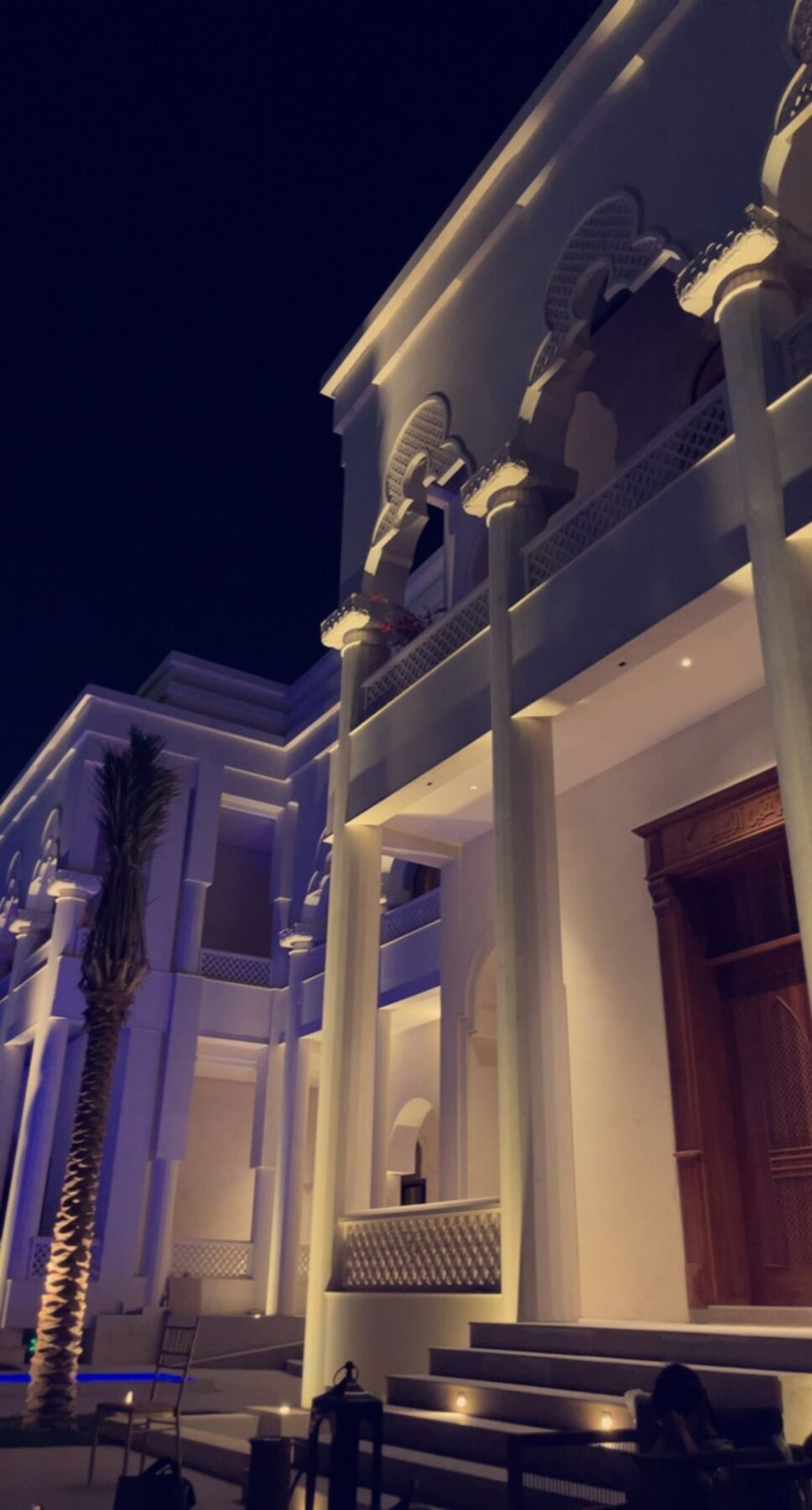
In hospitality, lighting is not decoration — it is revenue. It decides how long a guest stays, whether a room photographs well enough to be shared, how expensive the food looks, and whether the space feels like somewhere worth paying more to sit in. Hotel and restaurant lighting design is the practice of engineering those outcomes deliberately.
This guide covers how hospitality lighting is planned across Saudi Arabia and the UAE — zone by zone, the commercial logic behind each decision, and the mistakes that quietly cost operators money every night.
Lighting is an operational decision, not a finish
A restaurant lit at the wrong level does not simply look wrong — it behaves wrong. Too bright and guests eat faster and leave sooner, which lowers spend per table. Too dim and they cannot read the menu, staff cannot read the room, and the space feels careless rather than intimate. The correct level is a commercial choice dressed as an aesthetic one.
The same applies to hotels. A lobby that reads flat at night undermines the first impression the entire brand rests on. A guest room where the only switch is a harsh ceiling light produces poor reviews for reasons guests rarely articulate — they just say the room felt cheap.
Zone by zone
Hotel lobby and arrival
The lobby carries the brand. It needs a strong sense of composition — bright points of interest, darker transitions between them, and vertical light on the surfaces guests actually look at: reception, feature walls, art. Avoid a uniformly lit ceiling; it flattens the architecture and makes an expensive space look like a corridor. The lobby must also transition believably from day to night, which means dimming and scenes, not a single fixed setting.
Reception desk
Staff faces must be lit from the front, at face height, or the desk reads as unwelcoming. Overhead-only light puts eye sockets in shadow. This is a small detail that changes the perceived hospitality of the whole property.
Guest rooms
The room where operators most often under-invest and guests most often notice. A good guest room needs at minimum: a warm low ambient layer, independent reading lights at each side of the bed, a properly lit vanity or desk, and a very low night circuit for the path to the bathroom. Crucially, it needs controls a guest understands in three seconds without instructions. Complex scene panels in guest rooms generate complaints, not delight.
Restaurant dining floor
The single most important rule: light the table, not the room. A pool of warm light on each table, with the surrounding space darker, creates intimacy, makes the food look better, and makes a half-empty restaurant still feel alive. Uniform ceiling light does the opposite — it exposes empty tables and flattens every plate.
Colour rendering matters commercially here. Food under poor-quality light looks grey and unappetising. Specify high colour rendering in any space where food is served or displayed.
Bar and lounge
Darker overall than dining, with the back bar treated as the feature — it is the visual anchor of the room and often the most photographed surface in the venue. Light the bottles and the bar face, keep the seating low and warm, and make sure staff have enough task light to work accurately without lighting the guests.
Outdoor terrace
Terraces are usually the highest-margin seating in the region and the most frequently ruined by lighting. They need low, warm, glare-free light — never floodlights, never cool white. The goal is that guests can see each other and the food while the surroundings stay soft, so the terrace feels like an evening destination rather than a lit car park.
Corridors and back of house
Corridors need far less light than is usually installed, but they need consistency — a corridor with alternating bright and dark patches feels institutional. Back of house is the opposite problem: it needs genuinely functional, higher-level light for safety and speed, and it should be on separate circuits so it never bleeds into guest-facing areas.
The commercial mistakes that cost the most
- One brightness setting for all hours. A venue that looks identical at noon and at 10pm is failing at both. Scenes are the cheapest way to make a space feel right all day.
- Cool white light in dining areas. It makes food look unappetising and skin look unwell. Warm light is not a style preference in hospitality; it is a commercial requirement.
- Visible glare from guest seating. If a guest can see a bright source from their chair, they will feel subtly uncomfortable for the whole meal without knowing why.
- Poor colour rendering. Cheap sources make food, drink, timber and fabric all read as flat and grey — undoing the entire interior budget.
- No maintenance plan. A scheme with five failed lamps looks neglected. Specify accessible fixtures and consistent lamps so replacement is simple and matched.
- Ignoring photography. Guests photograph hospitality spaces constantly. A room that photographs badly loses free marketing every single night.
Energy and running cost
Hospitality lighting runs long hours, so efficiency compounds quickly. But the saving rarely comes from buying the cheapest fixtures — it comes from using fewer, better-placed ones, dimming them when full output is not needed, and zoning the venue so empty areas are not lit at full power. A well-zoned scheme usually reduces both the installed load and the nightly running cost while looking considerably better.
When to involve a lighting designer
During concept and interior design, before ceilings, joinery and services are fixed. Hospitality projects have tight programmes and heavy coordination — lighting decided late becomes a compromise negotiated around ductwork. Involved early, lighting shapes the ceiling details, the bar joinery, and the electrical distribution in ways that cannot be retrofitted.
Frequently asked questions
How much does hotel or restaurant lighting design cost?
It depends on the area, the number of distinct zones, and whether facade and terrace lighting are included. Designers price by fixed project fee, per square metre, or as a percentage of the lighting budget. The design fee is separate from the cost of the fixtures.
Does lighting really affect how much guests spend?
Yes. Light level and warmth influence how long guests stay and how the food and space are perceived. Lighting the tables rather than the whole room is one of the most reliable ways to make a dining space feel intimate and worth staying in.
What colour temperature should a restaurant use?
Warm light is the standard for dining and lounge areas, with high colour rendering so food and materials read accurately. Cool white light in a dining room makes food look unappetising and is one of the most common and costly errors.
Can lighting be improved in an operating venue without closing?
Often, yes. Re-aiming existing fixtures, correcting colour temperature, adding dimming and re-zoning circuits can transform a space with limited disruption. A full re-design achieves more, but targeted corrections deliver a large share of the benefit quickly.
Do you work on hospitality projects in both Saudi Arabia and the UAE?
Yes. We work from studios in Riyadh and Dubai and deliver hotel, restaurant and lounge lighting projects across both countries.