Most people hire a lighting designer once. There is no second chance to learn from, and the difference between a good choice and a poor one only becomes visible after the ceilings are closed and the money is spent. Choosing a lighting designer is therefore mostly about knowing which questions separate a designer from a supplier.
First: understand who you are actually talking to
Three very different businesses present themselves as lighting companies, and confusing them is the single most expensive mistake in the process.
The supplier
Sells fixtures. May offer a free "lighting plan" — which exists to justify a fixture list. Their revenue comes from what you buy, so the incentive is more fixtures, not better light. Useful at the purchasing stage; not a designer.
The electrical contractor
Installs. Competent at circuits, conduit and compliance, and essential to the build — but their plan is normally a symmetrical grid of downlights, because that is fast to install and hard to criticise. It is a wiring plan, not a design.
The independent lighting designer
Paid a fee for design, not a margin on hardware. Has no financial reason to specify more fixtures than the space needs, and every reason to make the result look good — because the result is the product being sold.
None of these is dishonest. They simply solve different problems. Ask directly: "Do you earn from the fixtures, or from the design?" The answer tells you which conversation you are in.
What to look for in a portfolio
Portfolios are easy to make look impressive and hard to read. Some practical filters:
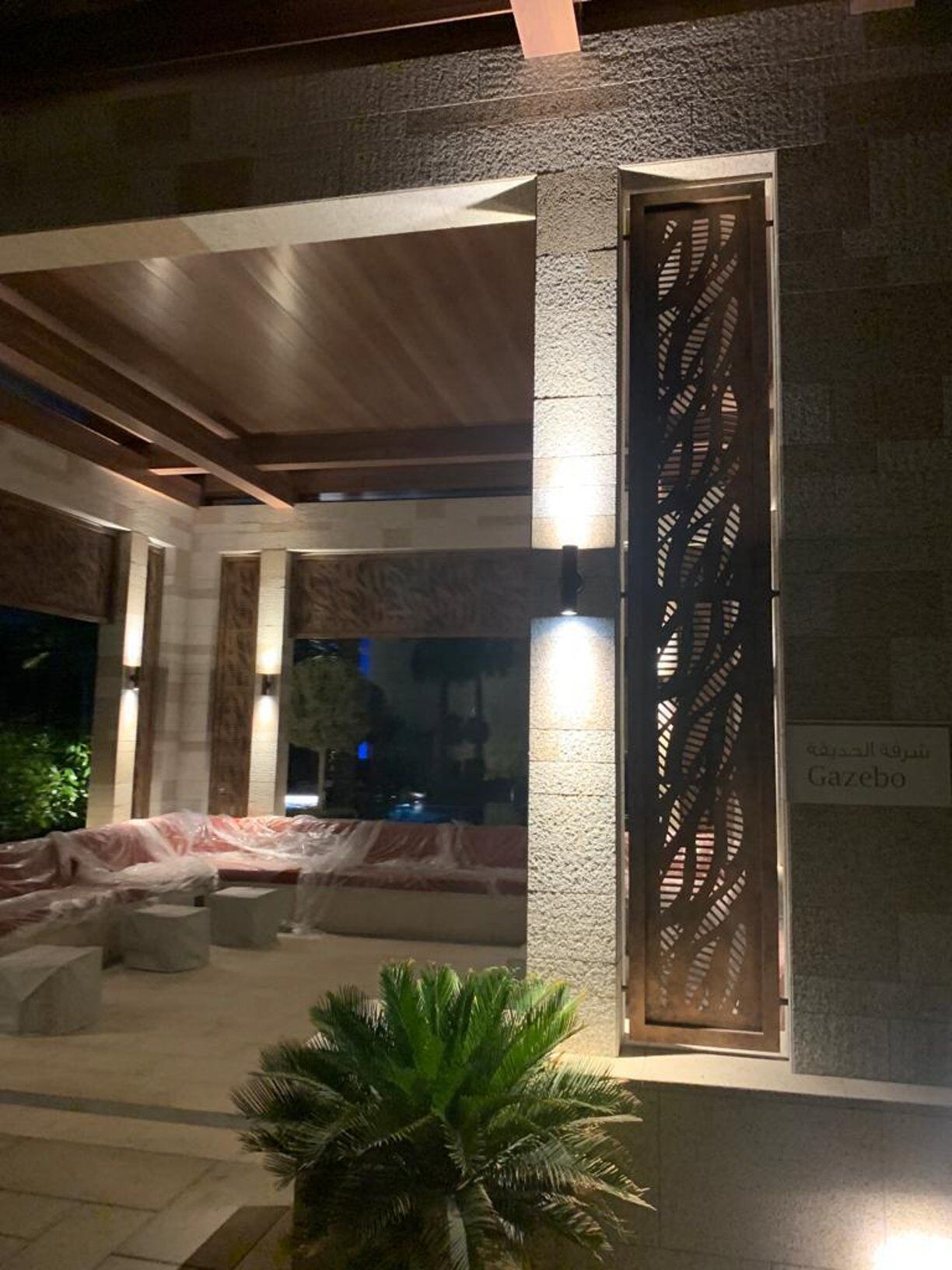
- Night photography. A lighting portfolio full of daytime shots is not showing you lighting. Look for finished spaces photographed after dark.
- Shadow and contrast. Every image evenly bright means one setting and no composition. Depth is the evidence of design.
- Comparable projects. Excellent retail work does not automatically mean excellent villa work. Ask for projects of your type and scale.
- Invisible fixtures. In good work you notice the light, not the hardware. If every image is dominated by decorative fittings, you may be looking at a product catalogue.
- Real, not rendered. Renders show intent; photographs show delivery. Ask which is which — a designer with built work will tell you plainly.
Questions worth asking in the first meeting
- What exactly do I receive at the end — drawings, schedules, control layouts, specifications?
- Do you visit site during installation, and how often?
- Who commissions and aims the fixtures once they are installed?
- Are you independent of any manufacturer, or tied to particular brands?
- What happens if I want to change something after the design is issued?
- Can I speak to a client whose project you completed more than a year ago?
That last question is the most revealing. Anyone can produce a happy client on handover day. A client who is still satisfied a year later has lived with the maintenance, the controls and the reality of the scheme.
The deliverables that actually matter
A proper lighting design package is more than a plan with symbols. Expect, at minimum:
- Reflected ceiling plan showing every fixture position and type.
- Fixture schedule — what each one is, its output, beam angle and colour temperature.
- Circuit and control layout — what switches with what, and which scenes exist.
- Details for coves, recesses and any concealed lighting the builder must construct.
- Aiming and commissioning notes so the scheme is set up correctly at the end.
If a proposal includes only a fixture list and a price, you are being sold products, not design.
Warning signs
- A free design. Design has a cost. If nobody is charging for it, it is being paid for inside the fixture margin — and the incentive runs against you.
- Instant fixture selections. A designer who names products before understanding how you use the space is applying a template.
- No questions about your habits. Good briefings are full of questions about who uses each room, when, and for what.
- Only one brand. Independence is what makes a specification trustworthy.
- No site involvement. A design that nobody supervises during installation rarely survives contact with the site.
Fees: what is normal
Lighting designers typically charge a fixed project fee, a rate per square metre, or a percentage of the lighting budget. All three are legitimate. What matters is that the fee is stated separately from the fixtures, so you can see what you are paying for design and what you are paying for hardware.
Be cautious of any structure where the designer's income rises with the fixture spend — it quietly rewards over-specification.
Timing
The best moment to appoint is during architectural and interior design, while ceilings, coves and electrical routing are still on paper. That is when lighting can shape the building rather than be attached to it. Appointing after construction still helps, but the options are narrower and the fee buys less.
Frequently asked questions
What is the difference between a lighting designer and a lighting supplier?
A supplier earns from selling fixtures; a designer earns a fee for the design itself. That difference decides the incentive. A designer has no reason to specify more fixtures than the space needs.
Should I pay for lighting design, or take a free plan from a supplier?
A free plan is paid for inside the fixture price. It usually means more fixtures than necessary, chosen from one brand's catalogue. A paid, independent design typically costs less overall because it reduces the fixture count and avoids rework.
What should a lighting design package include?
A reflected ceiling plan, a fixture schedule with outputs, beam angles and colour temperatures, a circuit and control layout, construction details for coves and recesses, and aiming and commissioning notes.
When should I appoint a lighting designer?
During architectural and interior design, before ceilings, coves and electrical routing are fixed. Appointing after construction is still worthwhile, but the available options are considerably narrower.
Do you work across Saudi Arabia and the UAE?
Yes. We work from studios in Riyadh and Dubai and deliver projects across both countries.